It looks more alike from the outside
From the outside the Nordic power market is one story. A shared power exchange, price areas across borders, joint imbalance settlementProcess where the difference between planned and actual power exchange is reconciled - essential for the power market to function.. A company operating in two countries therefore often expects the technical side to be shared as well.
It is not, and the difference is larger than different APIs.
Denmark   DataHubNational hub for metering data and market processes in the Norwegian electricity market.            live March 2013
Norway    ElhubNational hub for metering data and market processes in the Norwegian electricity market.              live 2019
Finland   DatahubNational hub for metering data and market processes in the Norwegian electricity market.            live 21 February 2022
Sweden    Elmarknadshubben   not in operation
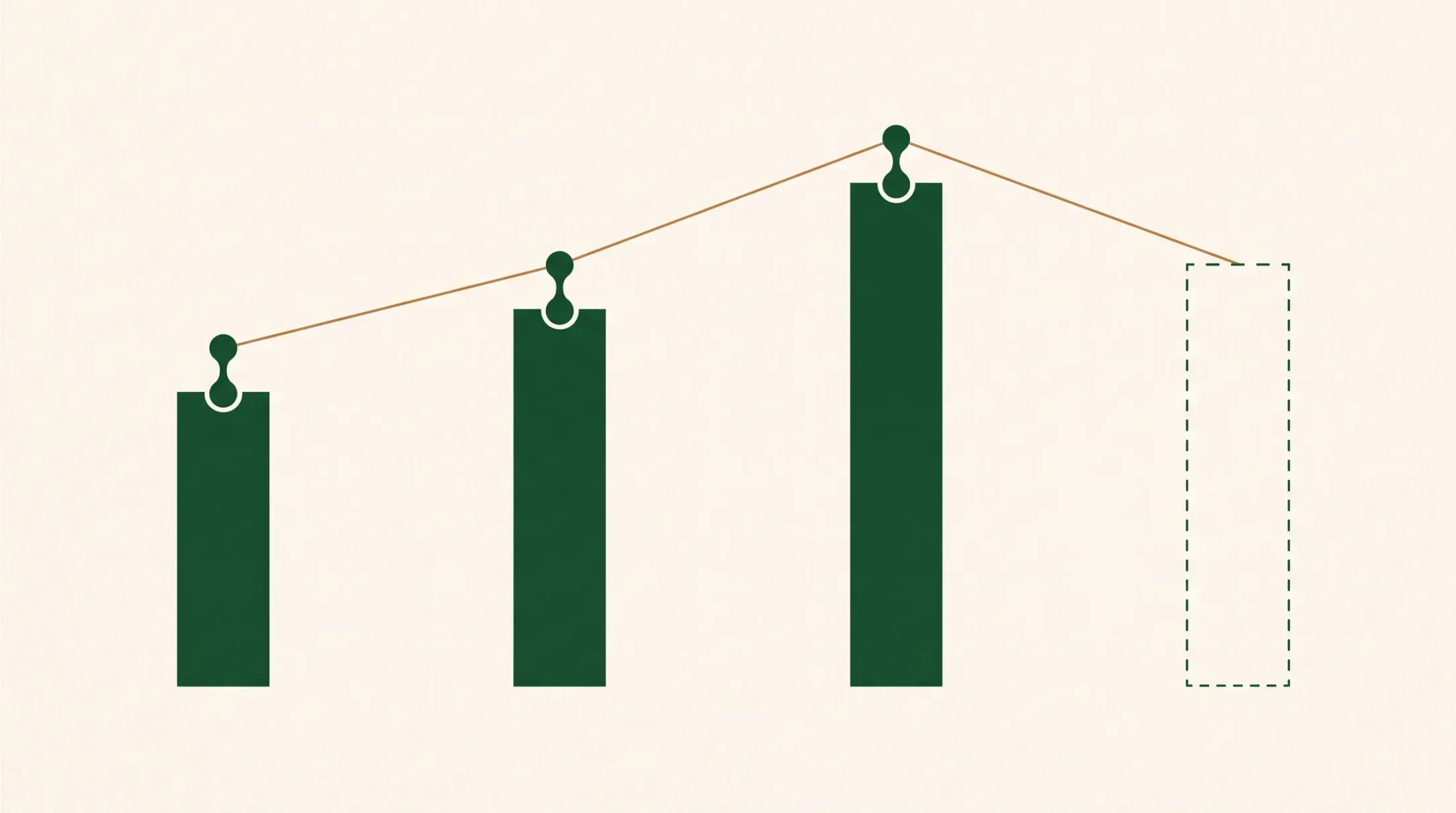
Nine years separate the first hub from the third. The fourth does not yet exist.
What a hub does, and why it is worth something
The principle is the same in all three countries that have one: instead of every party talking to every other party, everyone talks to the hub.
Without a hub, a grid company with three hundred suppliers in its area has three hundred counterparties, each with its own uptime and its own reading of the format. With a hub there is one counterparty, one rulebook and one queue. The processes a hub takes over are typically supplier switching, metering data exchange and the basis for settlementTurning metering data into money. Consumption and production per metering point become what each party owes or is owed..
The scale is real. The Danish hub gathered around 3.3 million metering points when it arrived, the Finnish one around 3.8 million. Finland connected some 80 suppliers and 80 grid companies on the same day.
The gain is not primarily technical. It is that the rules become the same for everyone, and that a party doing something wrong does it wrong in one place where it can be caught.
Sweden is not running late. Sweden is a different market.
It is easy to read Sweden as Norway minus four years. That reading is wrong, and it is the one that costs the most.
Svenska kraftnätSweden's system operator for the transmission network - equivalent to Statnett's role in Norway. received the assignment in 2015 and started the project in 2016, aiming for operation no earlier than the end of 2020. The date slipped several times, and on 22 September 2020 the board decided to pause the work. The stated reason was that the legal basis was not in place. Around 140 million Swedish kronor had been invested by then.
That blockage was cleared on 18 June 2026, when Sweden adopted a new electricity market act, after a decade of postponements. The hub is still not in operation.
In practice this means that market messages in Sweden still travel from party to party, in the EdielNordic profile of the EDI EDIFACT standard - used for electronic message exchange in the Nordic power market via Elhub. formats. That is not a transitional arrangement while something better is prepared. It is how the Swedish market works today, and anyone operating there has to handle bilateral message exchangeMessages travel directly between two parties, without passing through a shared hub. The opposite of the centralised model Elhub is built on. Also called point-to-point. from day one.
Sweden has around 10 million electricity customers. That is a larger market than Norway's, and it is organised in an entirely different way.
Why the hubs are not interchangeable
Even among the three that exist, the similarity is smaller than it looks.
The message standards differ. Denmark uses eBIX. Norway and Sweden have used EdielNordic profile of the EDI EDIFACT standard - used for electronic message exchange in the Nordic power market via Elhub., the Nordic family of EDIFACTElectronic Data Interchange For Administration, Commerce and Transport - UN standard for electronic data exchange. messages, in use since 1996. A system that speaks to one hub cannot simply speak to another.
The regulators differ. Deadlines, processes and roles are set nationally. They do not align automatically, even where the terms have the same name.
The year of construction sits in the architecture. Denmark built in 2013, before smart meters were everywhere. Norway built in 2019, with the meter rollout complete. Finland built in 2022, as 15-minute values were arriving across Europe. Each hub carries the shape of the problem it was built for.
One detail worth noting because it can mislead: the Danish and Finnish hubs share a system supplier. That does not make them alike. The requirements came from two different markets, nine years apart.
What this means in practice
The consequence is easy to state and expensive to discover late: one integration per market, not one for the Nordics.
It is not only the format. A supplier switchProcess where an electricity customer changes their power supplier - handled through standardised messages via Elhub. has different step sequences, different deadlines and different error codes in each country. A metering valueOne measurement from one metering point for one period of time. The building block all settlement rests on. has different resolution and different validationThe first step in VEE - automated checks of metering data against technical and logical limits to detect obviously erroneous values. requirements. Roles can share a name and mean something slightly different.
And for Sweden something more fundamental applies: you cannot plan around a central interface that does not exist.
There is nevertheless one layer that genuinely is shared across the Nordics, and it is not the one you would expect. We get to it in the third part.